

Treatment guide
Photofacial & Pigment Correction
An even complexion, without the patchwork of past summers.
Light-based treatment for the things that make skin look older than it feels: brown patches, diffuse redness, and small visible vessels.
What is it?
A photofacial uses light energy absorbed preferentially by pigment or by blood vessels, leaving the surrounding skin comparatively undisturbed.
Because the light targets colour, it is well suited to discolouration and poorly suited to problems that are purely about texture or volume.
Treatment settings and suitability depend on your skin type and history — this is a treatment where assessment genuinely changes the answer.
What can it help improve?
- Brown spots and sun-related pigmentation
- Diffuse facial redness
- Small visible vessels
- Uneven tone across the face, neck, chest, or hands
- General dullness associated with accumulated sun exposure
Related goals: Sun damage & pigmentation
Who tends to consider it?
- People whose skin tone has become patchy rather than lined.
- People with a history of sun exposure who want a more even complexion.
- People with persistent redness who have ruled out an untreated skin condition.
- People who want visible improvement in discolouration without a resurfacing recovery.
What it does — and what it doesn't do
What it does
- Targets pigment and vascular concerns specifically
- Can improve overall evenness of tone
- Can be used on the face and on other sun-exposed areas in appropriate cases
- Is usually planned as a short series
What it doesn't do
- Treat texture, scarring, or laxity — those need different treatments
- Prevent new pigmentation from forming if sun protection is not part of the plan
- Suit every skin type or every kind of pigmentation; some pigment worsens with the wrong light-based approach
- Replace medical assessment of any lesion that is changing — that comes first, always
What the appointment may involve
Assessment includes skin type, recent sun exposure, medical history, and what is actually causing the discolouration you are seeing.
Eye protection is used, and most people describe the sensation as a quick snap with each pulse.
Treated pigment often darkens temporarily before clearing, which your provider will explain in advance so it is not a surprise.
Daily sun protection is part of the treatment plan rather than an optional extra.
General educational description only. Anything specific to you — suitability, preparation, and aftercare — is discussed at consultation.
What results typically mean
The improvement usually sought is evenness: skin that reads as one colour rather than several.
Change typically develops over the days and weeks following each session.
Because pigmentation is influenced by sun, hormones, and genetics, maintenance is a realistic part of the conversation rather than a failure of treatment.
Related results
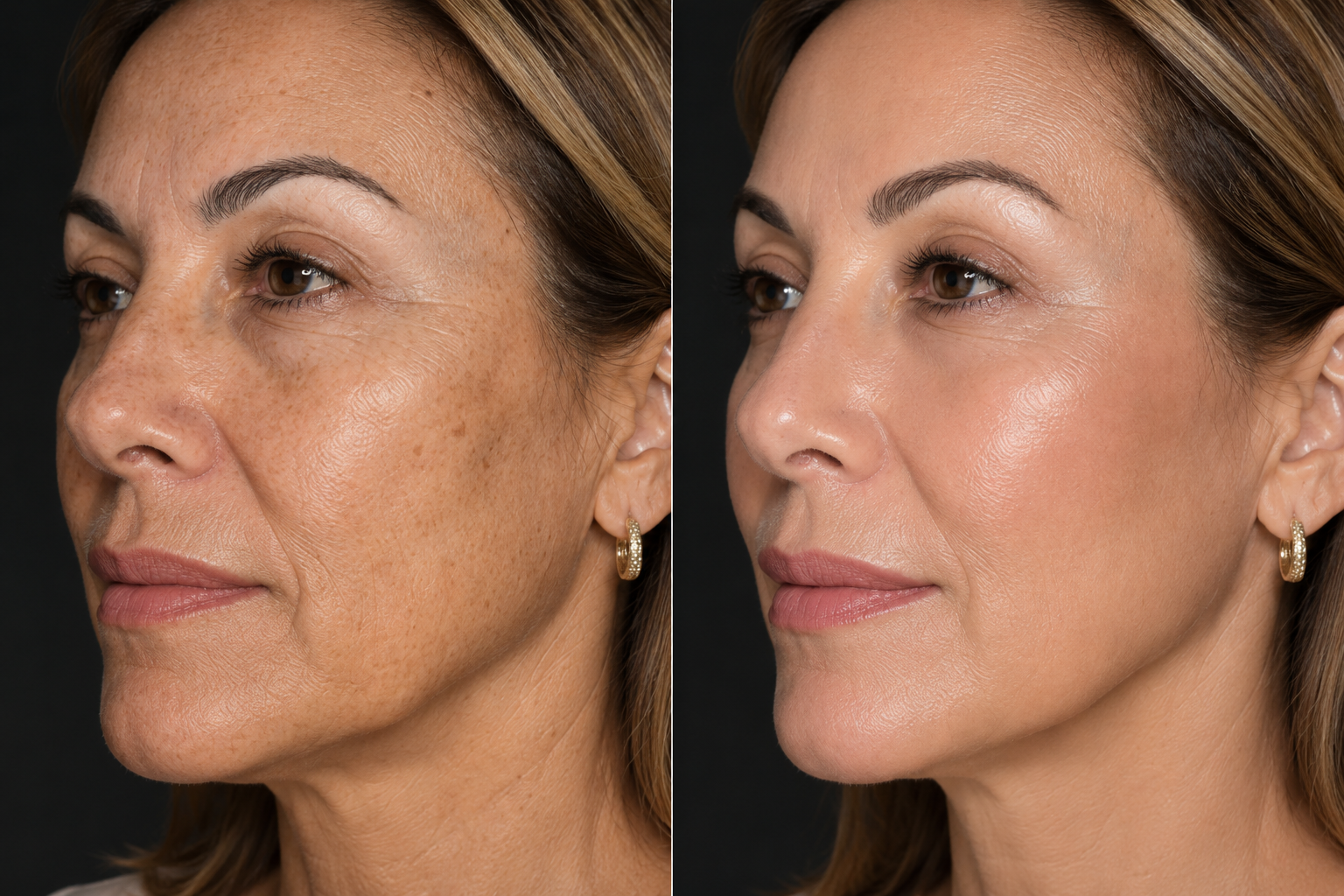
Skin Rejuvenation
Tone • Texture • Visible Sun Damage
A more even-looking, luminous complexion with visibly refined tone and texture.
Treatment example · Results may vary.
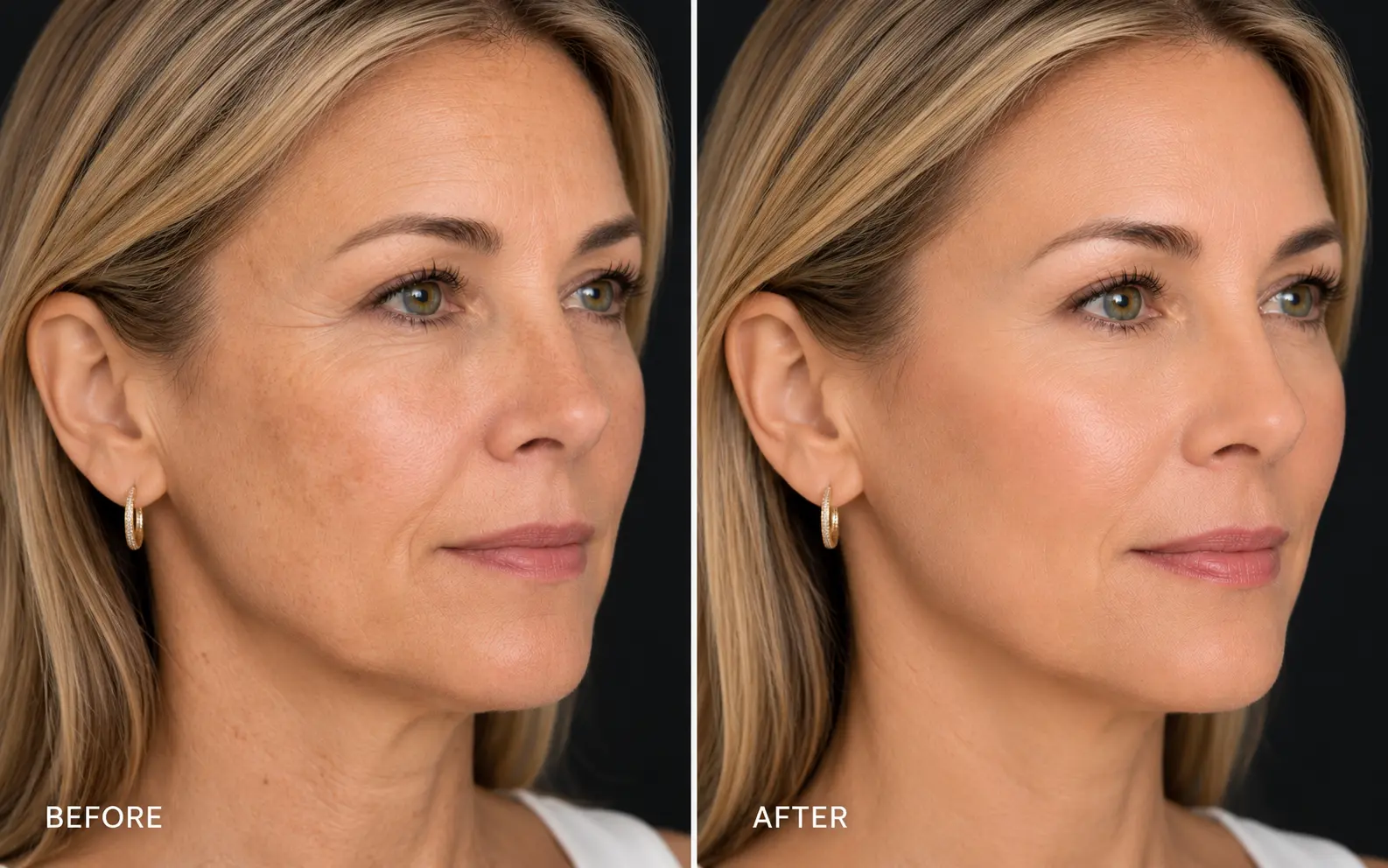
Tone & Pigment Correction
Sun Damage • Uneven Tone • Surface Texture
Clearer, more even-looking skin across the cheek and jaw, with pigment that no longer draws the eye first.
Treatment example · Results may vary.
Treatment examples. Results may vary.
Timing and treatment series
Usually planned as a short series spaced to allow the skin to settle between sessions.
Seasonal timing matters. Recent or planned sun exposure affects whether treatment is appropriate at all.
Periodic maintenance is common, particularly for people who spend time outdoors.
Recovery and downtime
Redness and a warm sensation afterwards are typical, and treated spots may look darker before they clear.
Downtime is usually limited for this category of treatment, but varies with what is being treated and how much.
Sun protection afterwards is a requirement, not a preference.
How this may fit with other treatments
Pigment and redness are commonly addressed before or alongside texture work, because clearing colour changes what still needs treating.
Medical skin care at home is part of holding the result — this is one of the treatments most dependent on what happens between visits.
Where texture and pigment both need work, a combined plan is usually staged rather than combined in a single appointment.
Questions to ask your provider
- Is my pigmentation the type that responds well to light-based treatment?
- Is there any pigment here you would want assessed medically first?
- What does my home routine need to include to hold this?
- What are you actually seeing when you look at my face, in your own words?
- What would you do first if this were staged over a year rather than one visit?
- What is this treatment unlikely to change for me?
- What does maintaining this look like, realistically, once we start?
- What would make you recommend against treating me today?
This is planned as a sequence rather than a single appointment, so cost arrives in stages. See how plans and payment work
Who you’d see
Providers for this area


What clients notice
“My goal wasn't perfect skin.”
Common questions
Photofacial (IPL): frequently asked
Still deciding? Start with a conversation.
A consultation is where reading becomes a plan — staged, priced, and entirely yours to decline.
19 guides published · more in development