

Treatment guide
RF Microneedling
Refined texture and firmer-looking skin, built gradually through your own repair response.
One of the more versatile skin treatments in a medical practice — and one where honest expectation-setting matters more than the technology.
What is it?
Microneedling creates controlled micro-injuries in the skin, which prompts the skin's own repair and remodelling response.
RF microneedling adds radiofrequency energy delivered through those channels, so the treatment reaches deeper support layers as well as the surface.
It is a stimulation treatment rather than a removal treatment: the change comes from what your skin does over the following weeks and months, not from what is taken away on the day.
What can it help improve?
- Rough or uneven surface texture
- Enlarged-looking pores
- Acne scarring, once active breakouts are settled
- Fine lines and early crepiness
- Mild laxity where the skin has lost some firmness
- Skin quality on the neck and décolletage in appropriate cases
Related goals: Skin texture, Acne & scarring, Loose or crepey skin
Who tends to consider it?
- People whose skin feels rough or looks dull despite a good routine.
- People with acne scarring who have finished treating active acne.
- People who want gradual improvement rather than a dramatic reset.
- People looking for a skin-quality treatment that can be planned around real life.
What it does — and what it doesn't do
What it does
- Encourages collagen remodelling over time
- Can improve texture, firmness, and the appearance of scarring
- Works across a planned series rather than a single visit
- Can be adapted to different depths and areas
What it doesn't do
- Replace surgery for significant skin laxity
- Treat pigment or redness as its primary purpose — light-based treatment usually addresses those better
- Produce an immediate result; the change accumulates over weeks
- Suit everyone. Active acne, certain skin conditions, and some histories change the recommendation
- Guarantee scar removal — scarring is usually improved rather than erased
What the appointment may involve
A skin assessment comes first, including what you use at home and anything you have had done recently.
Comfort measures are discussed and prepared before treatment begins.
The treatment itself is methodical rather than quick, and afterwards the skin typically looks flushed.
Home care matters here more than in most treatments, and your provider will give you specific instructions for your skin.
General educational description only. Anything specific to you — suitability, preparation, and aftercare — is discussed at consultation.
What results typically mean
The improvement people generally seek is quality rather than change: skin that behaves better, sits better under makeup, and looks more even in ordinary light.
Because the mechanism is remodelling, improvement continues after the last session rather than stopping with it.
Response varies with age, skin type, scarring history, sun exposure, and home care consistency.
Related results
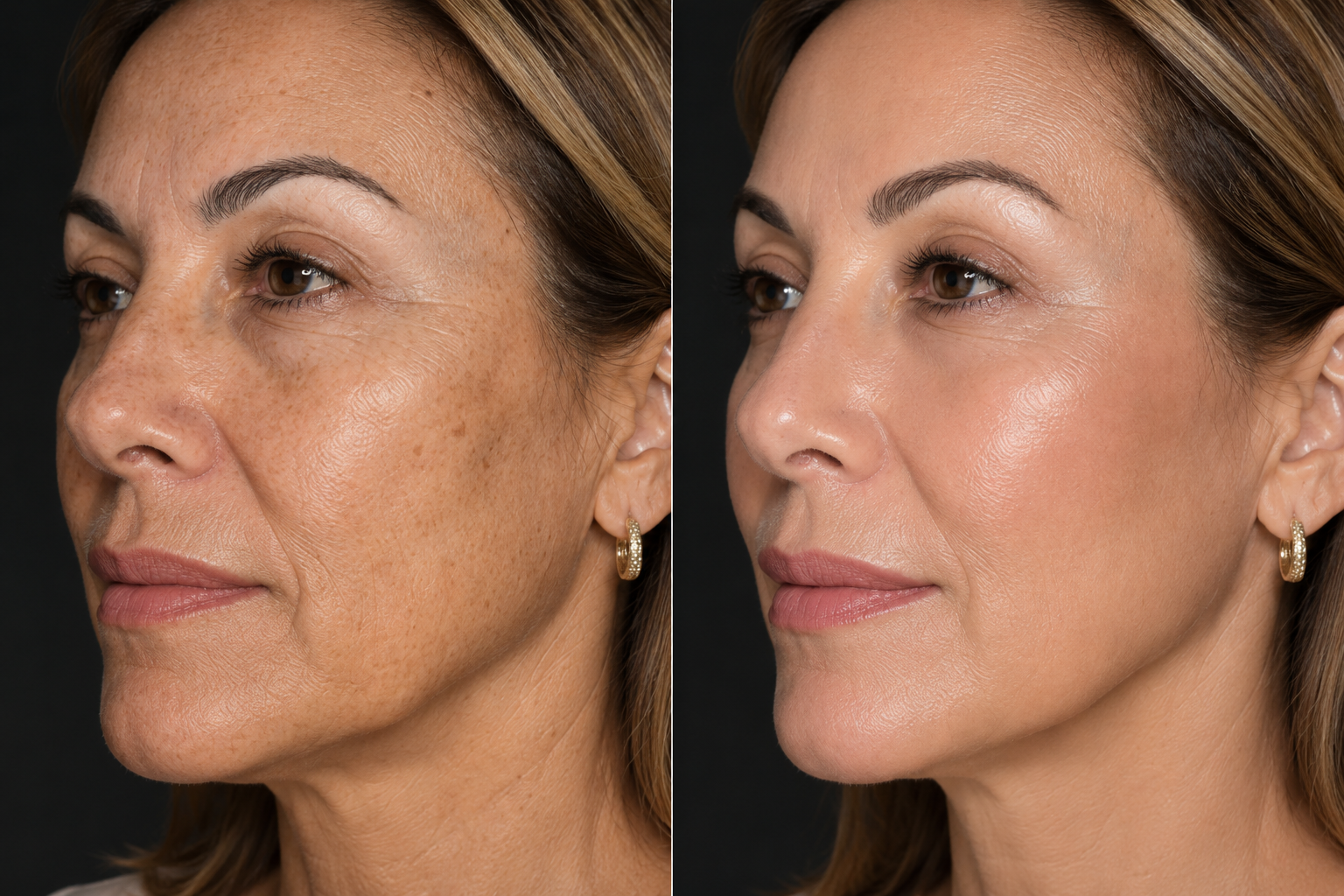
Skin Rejuvenation
Tone • Texture • Visible Sun Damage
A more even-looking, luminous complexion with visibly refined tone and texture.
Treatment example · Results may vary.
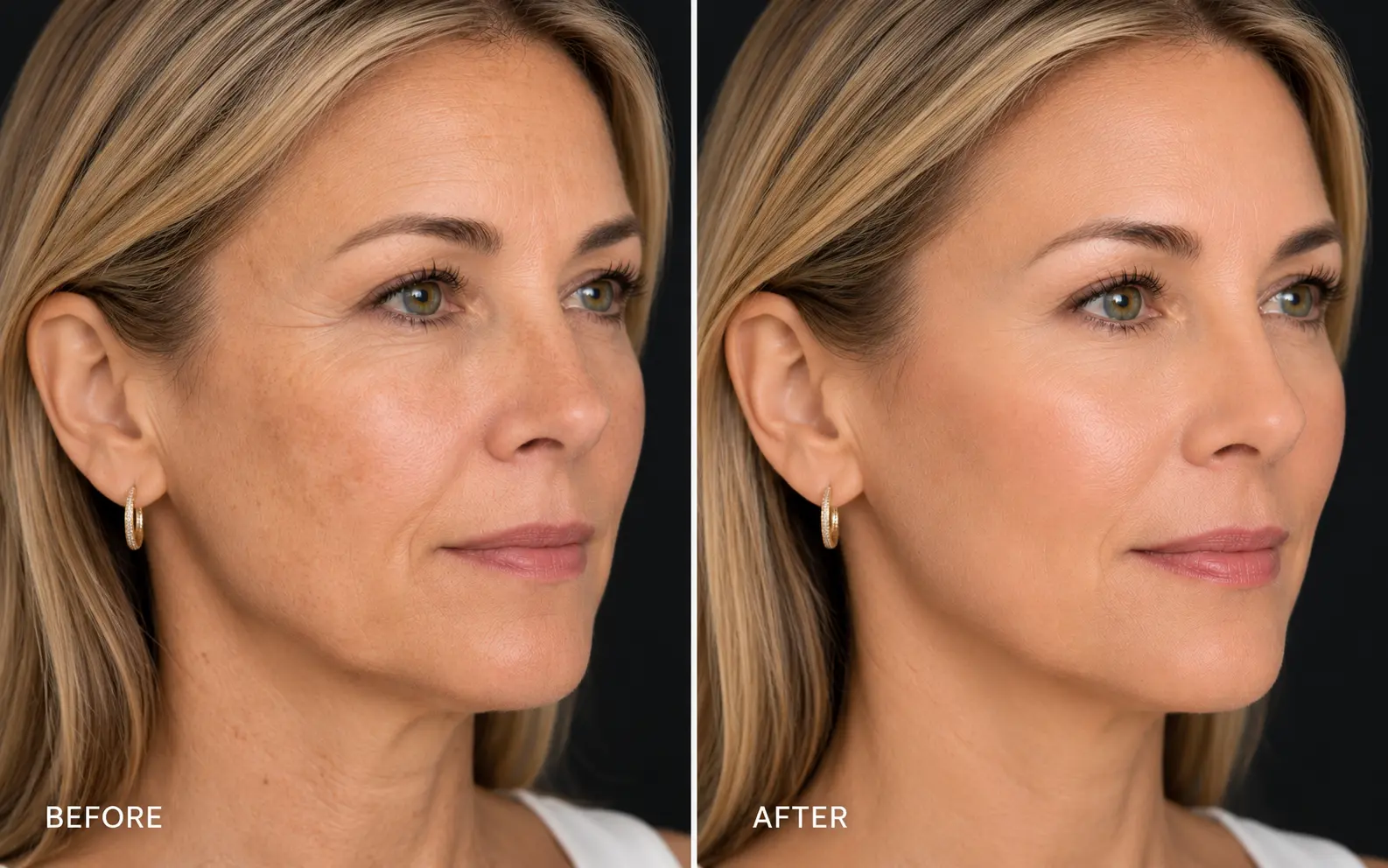
Tone & Pigment Correction
Sun Damage • Uneven Tone • Surface Texture
Clearer, more even-looking skin across the cheek and jaw, with pigment that no longer draws the eye first.
Treatment example · Results may vary.
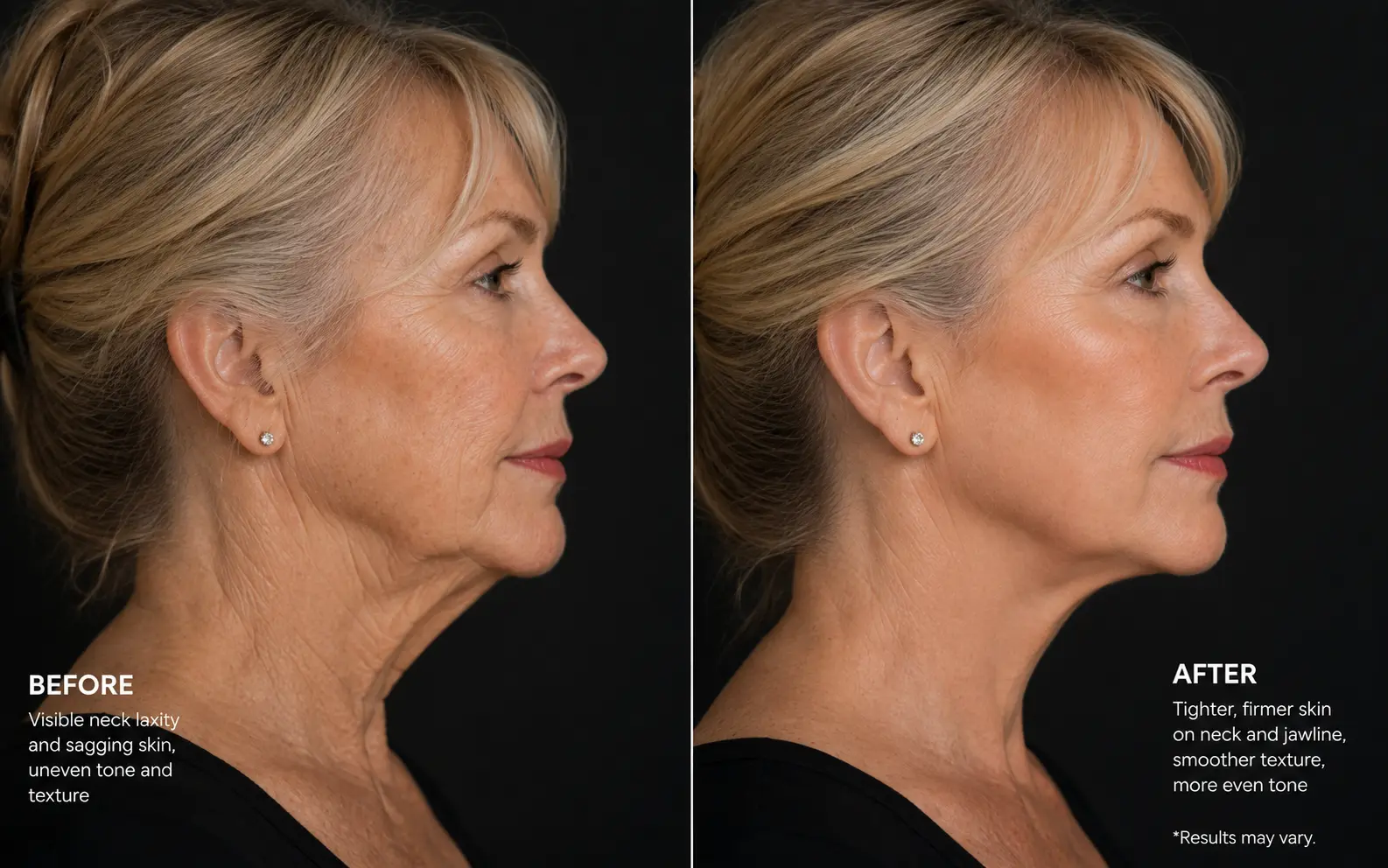
Neck & Jawline Rejuvenation
Neck Laxity • Skin Texture • Tone
Firmer-looking skin through the neck and along the jawline, with smoother texture and more even tone.
Treatment example · Results may vary.
Treatment examples. Results may vary.
Timing and treatment series
This is a series treatment. Improvement accumulates across sessions spaced apart to let the skin remodel between them.
The number of sessions varies with what is being treated — texture, scarring, and laxity do not behave the same way.
Your provider will discuss a realistic series length for your skin rather than a fixed package.
Recovery and downtime
Redness resembling a strong flush is typical afterwards, and duration varies by depth and by individual.
Sun protection is a genuine requirement rather than a suggestion during a treatment series.
Downtime varies significantly by treatment depth, so plan your first session with room in your schedule.
How this may fit with other treatments
Active acne is settled before scar resurfacing begins. Order matters.
Pigment and redness are often addressed with light-based treatment alongside or before texture work.
Where lines are caused by movement, wrinkle relaxers may be discussed as a complement rather than a substitute.
Questions to ask your provider
- Is my scarring the type that responds to this, or is another approach better?
- How many sessions would you consider a fair trial before we reassess?
- What does my home routine need to look like for this to work?
- What are you actually seeing when you look at my face, in your own words?
- What would you do first if this were staged over a year rather than one visit?
- What is this treatment unlikely to change for me?
- What does maintaining this look like, realistically, once we start?
- What would make you recommend against treating me today?
This is planned as a sequence rather than a single appointment, so cost arrives in stages. See how plans and payment work
Who you’d see
Providers for this area

Dr. Elena Marlowe, MD
Founder & Medical Director

Avery Sloane, RN
Nurse Injector & Aesthetic Provider

Mara Castellan
Laser & Body Specialist

Brad Richardson, PA-C
Physician Assistant · Men's Aesthetics & Injectables
What clients notice
“I'm glad we didn't try to do everything in one visit.”
Common questions
RF Microneedling: frequently asked
Healthy skin never goes out of style.
Still deciding? Start with a conversation.
A consultation is where reading becomes a plan — staged, priced, and entirely yours to decline.
19 guides published · more in development