

Understanding what you’re noticing
Looking Tired
“Tired” is an observation, not a diagnosis.
People say it in almost identical words and mean entirely different things. This guide is about working out which of those things you are describing before anyone discusses treating it.
The short answer
“I look tired, even when I don’t feel tired” is one of the most common things people say at a first consultation — and one of the least specific. It describes an impression, not a feature.
The useful next step is not choosing a treatment. It is separating the impression into what you are actually noticing: shadowing, lines, lost definition, skin quality, or something that is not about your face at all.
What people usually mean by it
“Tired” is a word for the way a face reads to other people. It is usually the summary of several small things rather than one thing, which is why two people using the identical sentence can be describing entirely different faces.
It is also the word people reach for when they would rather not list what bothers them. That is reasonable, but it makes the sentence hard to act on — by itself, it does not point anywhere.
Nothing on this page is a diagnosis, and no observation below reliably indicates one cause. The point is to make the conversation more precise, not to reach a conclusion before an assessment.
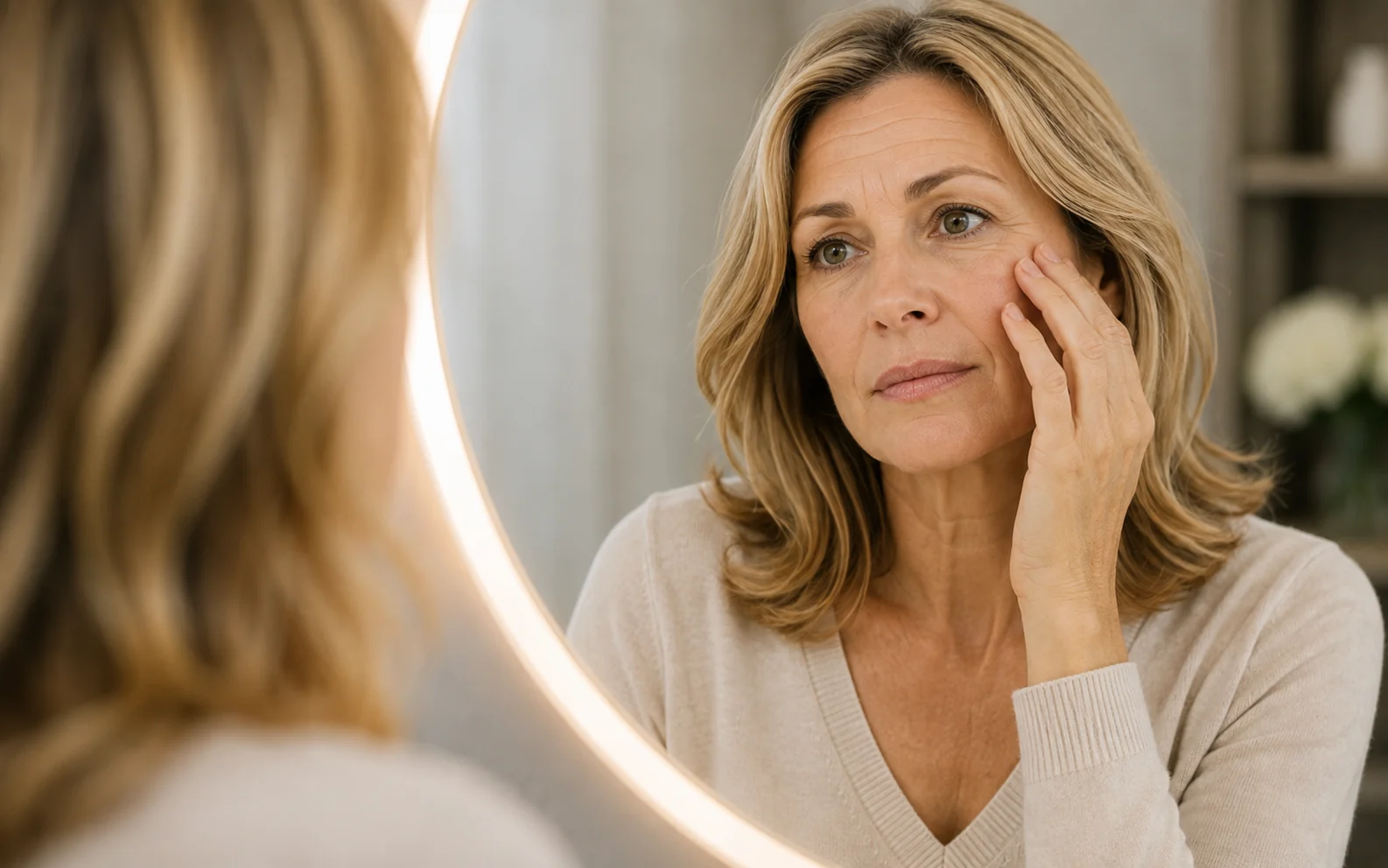
What you may actually be noticing
- Shadowing or hollowing under the eyes, most visible in photographs or overhead light
- Lines that stay visible when your face is completely still
- Lines between the brows or across the forehead that appear when you concentrate, which can read as tension rather than fatigue
- A face that looks flatter or less defined than it once did, particularly in the mid-face or along the jaw
- Dullness, uneven tone, or texture — skin quality rather than facial structure
- A change you cannot localise at all, which is common and is not a failure of description
Related goals: Looking tired
What this observation does — and doesn't — tell you
What noticing it tells you
- Tell you that something has changed enough for you to notice it
- Give a consultation somewhere concrete to begin
- Help you separate what bothers you from what you have read about
What it doesn’t tell you
- Tell you what is causing it
- Indicate which treatment, if any, is appropriate
- Distinguish an aesthetic change from a medical or lifestyle one
- Mean that treatment is the right response
Which educational path is most relevant?
If what you notice is
Shadow, darkness, or hollowing under the eyes
The area most often meant by “tired” — and the one where cause matters most before anything is considered.
Understand Under-EyeIf what you notice is
Lines between the brows or across the forehead that make you look tense or stern
Expression-related lines are a different question from volume or shadow, and are assessed differently.
Understand Wrinkle RelaxersIf what you notice is
A flatter face, or definition you have gradually lost
Structural change reads as tiredness more often than people expect.
Understand Dermal FillersIf what you notice is
Dull, uneven, or rough-textured skin
Where skin quality is the complaint, structural treatment is answering the wrong question.
Understand RF MicroneedlingIf what you notice is
Low energy, poor sleep, or feeling as tired as you look
Sometimes the honest reading is that this is not an aesthetic question at all.
Understand Clinical WellnessIf what you notice is
You have read all of the above and still are not sure
Not knowing is the ordinary starting point, not a problem to solve first.
Understand Where to Start
Who tends to ask about this
- People who are told they look tired by others before they notice it themselves.
- People who dislike how they photograph but are fine with how they look in the mirror.
- People whose sleep and health have improved without the impression changing.
- People who have been offered a treatment for it elsewhere and want to understand the question before answering it.
Explanations that have nothing to do with treatment
Sleep, hydration, alcohol, screen time, allergy and sinus congestion, thyroid and iron status, and medication all affect how rested a face reads. None of these are aesthetic questions, and several are worth ruling out with your own physician first.
Genetics and bone structure account for a great deal of under-eye shadowing in particular. Where that is the case, no amount of rest changes it — and a treatment may still not be the right answer.
Photography is not neutral. Overhead light, a phone held below eye level, and a front-facing lens all exaggerate exactly the features people describe as tired.
When choosing a treatment yourself is the wrong move
- When you are selecting a treatment from what you have read rather than from an assessment — the same appearance has several possible explanations, and they are not treated the same way
- When the tiredness is medical: persistent fatigue, sudden change, swelling, or new asymmetry belongs with your own physician before any aesthetic conversation
- When you want everything addressed at once, which makes it impossible to tell what actually changed anything
- When somebody else’s comment is the reason you are considering it
What may be worth discussing
A consultation for this usually begins by asking you to point rather than to describe — what specifically, in what light, in which photographs, and for how long.
Where more than one thing is contributing, they are addressed one at a time, and often the smallest of them first. Where skin quality is contributing, it is frequently the sensible starting point because it changes the baseline everything else is judged against.
It is a normal outcome to be told that what you are describing is structural, genetic, or medical, and that no aesthetic treatment is the right response to it.

Questions to ask your provider
- When I say I look tired, what do you actually see when you look at me?
- Is what I am describing structural, skin quality, expression, or something else?
- Is any part of this something a treatment would not change?
- If I did one thing, which would make the biggest difference to the impression rather than to the feature?
- Is there anything here you would want me to raise with my own physician first?
- What are you actually seeing when you look at my face, in your own words?
- What would you do first if this were staged over a year rather than one visit?
- What is this treatment unlikely to change for me?
- What does maintaining this look like, realistically, once we start?
- What would make you recommend against treating me today?
Who you’d see
Providers for this area

Dr. Elena Marlowe, MD
Founder & Medical Director

Avery Sloane, RN
Nurse Injector & Aesthetic Provider

Brad Richardson, PA-C
Physician Assistant · Men's Aesthetics & Injectables
What clients notice
“She actually recommended doing less than I originally asked for.”
Common questions
Looking Tired: frequently asked
“Tired” is a summary. It is worth unpacking before it is treated.
Still deciding? Start with a conversation.
A consultation is where reading becomes a plan — staged, priced, and entirely yours to decline.
19 guides published · more in development